Pre Move-In
Pre Move-In Calgary
Land Development
 Land Development
How we build your community
At Minto, we don’t just build your new home; we’re proud to masterplan your community design as well. Our Land Development Team works hard in the background to bring your new community to life. From park development and creating thoughtful streetscapes to installing street utilities, building roads, and everything in between, the Land Development Team is on it.
Steps to building your community

What does community planning include?
- Final municipal approvals for your community are either complete or in the process of being finalized
- Infrastructure for utilities (telephone, cable, electricity and natural gas) is being installed
- Underground services are being installed
- Roads are being constructed
- Our condo tower sites are selected with the same process we use when designing our Single Family Home and Townhome communities. This diligence ensures our homeowners have an exceptional place to live.
Unless you are one of the last homeowners to move into your new community, the finishing touches on your neighbourhood will likely be put in place after you receive your keys. Our Land Development team completes the road paving, curbs and sidewalk installation prior to home construction starting, so repairs to any items damaged by construction activities may continue after you move in.
Location of Street Utilities
When you first purchased your Minto home, the exact location of utility structures such as fire hydrants, telephone service boxes, mailboxes, streetlights and electrical transformer boxes may not have been finalized. If you drive by your new home while it’s under construction, you may see a number of utility structures distributed across the streetscape.
To ensure the integrity and functionality of your new neighbourhood, municipal land next to your property may be designated as the most suitable location for utility structures or access easements. We work closely with municipalities and utility providers to follow placement guidelines and requirements, while being mindful of our homeowners. In most cases, utility structures are positioned near the corner of a property to reduce their impact on sight lines.
Completing Your Community
Grading is the process of shaping the land around your new home to ensure proper drainage and stability. The slope of the ground is carefully designed so that rainwater flows away from your foundation and toward designated drainage areas. This helps protect your home and contributes to the overall functionality of the neighborhood.
Homeowners should wait until final grading is complete before adding sod, building decks, or installing other backyard structures. Making changes too early can interfere with drainage plans and may require adjustments later.
Retaining walls are installed where significant changes in elevation require soil support or water management. These structures are usually built during the final grading process, after you receive the keys to your home. Locations may be noted in your Agreement of Purchase and Sale if determined in advance, but a retaining wall may still be added later if grading requirements following construction require one.
Swales are shallow, landscaped channels that direct rainwater away from homes and toward stormwater systems. They are typically formed during grading and finalized before landscaping. While swale locations may be identified in your Agreement of Purchase and Sale, they can shift as drainage plans are refined throughout construction.
- Along property lines between homes
- At the rear or side yards where natural drainage occurs
- Near low points in the grading plan to guide water toward catch basins or storm drains
Fencing may be installed to help define property boundaries, provide privacy, and meet community design guidelines. Installation typically occurs once grading is complete. Minto provides fencing in select locations, which are outlined in your Agreement of Purchase and Sale. This document will indicate where fencing is planned and what type (such as chain link or privacy) will be installed. Fencing inclusions can vary depending on the type of home purchased and its location within the community.
In many cases, a fence may be placed near the rear of your property, while side divisions between homes are often arranged directly with neighbors.
Fences are installed on your property rather than on the property line, as homeowners are responsible for ongoing maintenance. Architectural guidelines are in place for each community to ensure that fencing styles and locations complement the overall design and visual appeal of the neighborhood.
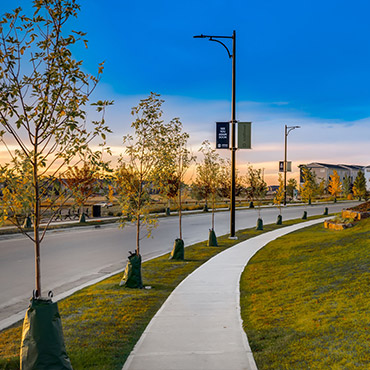
Tree planting is one of the final steps in completing the community, enhancing the streetscape and contributing to the neighborhood’s character. Municipal guidelines determine the species and placement of trees, and these plans are reviewed and approved by the City as part of the overall community design.
Trees are typically planted on the public right-of-way, which is the first few meters of land from the curb and is owned by the municipality. In some cases, trees may also be placed in backyards to meet municipal requirements when utility structures or other site conditions prevent planting in the usual locations. Because these trees are part of an approved landscaping plan, changes to their location or species are generally not permitted.
Planting schedules are seasonal and weather-dependent with work typically commencing in late spring or summer once the ground has thawed and dried to ensure healthy growth and longevity.
Homeowners are encouraged to wait for grading and landscaping completion, before making independent changes, as each home’s plan is designed to maintain a cohesive community appearance.
We're here to help

Your Customer Experience Coordinator can provide any answers or connect you with the right person to address any questions - during regular business hours.