



15 unique places to store books in small spaces
When you have more books than square footage, finding room for every title can take a little creativity. The upside is that books are beautiful objects in their own right, with different colours, sizes, and textures, so smart book storage ideas can double as décor.
If your collection keeps growing and your apartment storage doesn’t, these ideas can help with book organization while making better use of the space you already have.
1. Stack them up

Small space living is all about using the nooks and corners that might otherwise go to waste. A neat stack of books on the floor can feel intentional, relaxed, and full of personality, especially when you vary the height and placement.
• Arrange stacks by colour for a more coordinated look or mix them up for something more casual.
• Try them along a baseboard, beside the bed or sofa, under a window, below a desk, or tucked into a corner supported by two walls.
• Turn the spines out if you want the colour and titles to show, or face them inward for a quieter, more uniform look.
• Mix vertical and horizontal stacks to keep the display from feeling too rigid.
Tip: If you’re storing favourite books on the floor, place fabric or paper underneath to help protect the covers and make the whole stack easier to slide out when you want to rearrange it.
2. Create little collections

A little spare space on a bar cart, desk, side table, or TV credenza can become a home for a small stack of books. Add a plant or a favourite object and the display starts to feel styled rather than stored.
Tip: Group books by author, series, colour, or subject to make the display easier to browse and give your book organization a simple system.
3. Line them up

A row of books below a windowsill makes good use of a low strip of wall that is often left empty. Add a chair and a plant nearby and you have the beginnings of a reading nook with natural light.
4. Build a floating library

Floating shelves are a natural fit for smaller homes because they use wall space instead of floor space. A floating library shelf above the sofa, desk, bed, TV, or doorway can hold books without making the room feel crowded.
Try hanging a floating library (or two) above the:
• Above the sofa
• Around the TV
• Over the bed
• Above a desk
• Over or beside windows
• Above doorways
• Even above the toilet, if the wall space works
If you have tall ceilings, consider using the upper wall for books you reach for less often. A good-looking ladder can become part of the room rather than something you need to hide.
5. Turn a wall into a library

A spare wall or hallway can become a compact library without requiring custom built ins. Small bookshelves, modular cubes, and floating shelves can all scale with your collection and make books and shelves part of the room's design.
Tip: Wondering how to arrange books on a bookshelf? Try a mix of vertical rows and horizontal stacks, then leave a little breathing room for art, plants, or favourite objects.
6. Make use of a bench

A bench in the hall, entryway, dining area, or at the foot of the bed can do double duty as book storage. Fill the open space underneath with books or magazines, either standing upright or stacked horizontally.
7. Frame a doorway or window

Shelving around a doorway or window lets you use wall space that usually goes untouched. Add shelves to the sides and across the top to create a built-in look without giving up much floor area.
8. Corral books in baskets

If you prefer a tidier look, baskets make an easy home for smaller collections. Wicker, wire, wood crates, and canvas baskets can sit on a windowsill, shelf, tabletop, or floor while keeping books together and easy to grab.
Try baskets under the TV, beside the sofa, under a chair or table, in a closet, or in the corner of a room.
9. Use a bookcase as a room divider
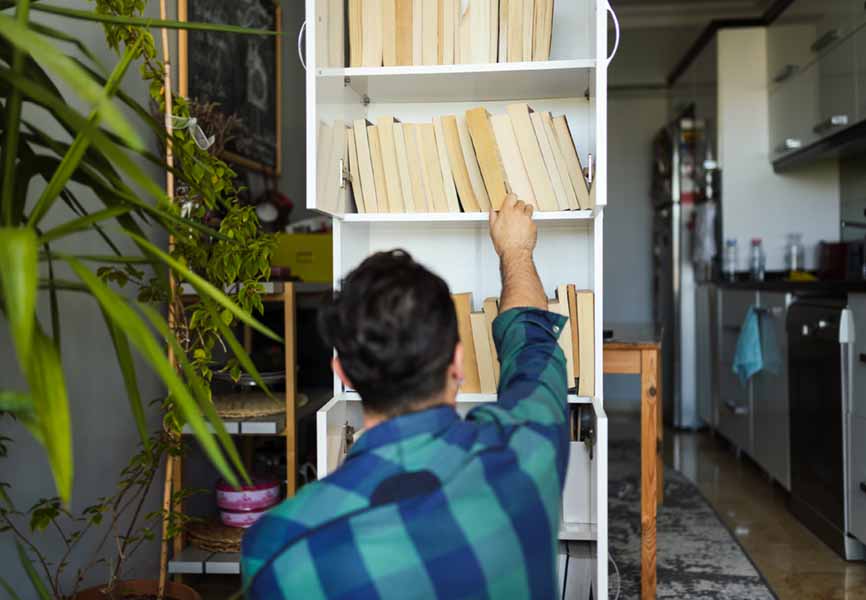
In a studio or bachelor apartment, an open bookcase can help define separate areas while adding storage at the same time. Choose a piece that lets light pass through so the room still feels open.
Tip: Not sure how to arrange books in a bookcase like this? Start with the heaviest books on lower shelves, then spread colour, height, and decorative pieces across the rest of the unit for balance.
10. Turn a closet into a mini reader

Extra closet space can become a tucked away library, especially if you already have built-in shelving. Even a standard closet may have room for a short narrow bookcase that keeps a collection organized without taking over the room.
A narrow white bookcase can visually recede inside a light-coloured closet, while a bedroom bookcase tucked behind closet doors gives you easy access without adding visual clutter.
If your building offers a storage locker, moving seasonal items out of the apartment can also free up closet space for the books you use year-round.
Tip: Many of our apartments have a ton of closet space, so if you’re a big reader in need of lots of storage, you might just find your perfect home with Minto Apartments.
11. Claim an awkward corner

12. Surround your bed with books
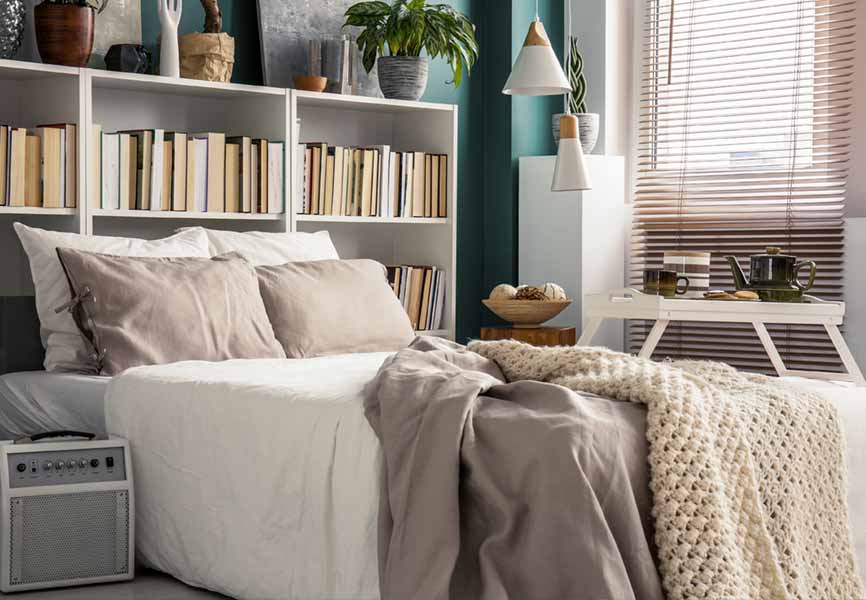
Bedrooms are full of underused areas, including the headboard wall, the foot of the bed, the sides of the bed, and the space underneath it. A few thoughtful additions can turn those zones into useful book storage.
• Stack a small number of books beside the bed in place of a traditional nightstand.
• Install floating shelves high enough above the headboard that they’re safely out of the way.
• Place a low bedroom bookcase at the foot of the bed or along an open wall.
• Use under bed storage for books you want to keep but don’t reach for every day.
13. Take a revolving bookshelf for a spin

Revolving bookshelves are not just for stores. Because they offer storage on several sides, they can hold a surprisingly large number of books in a relatively small footprint.
14. Put books on a rolling cart

A tiered cart on wheels is compact, flexible, and easy to move when you want to change the room. Park one beside a window, next to a chair, or along a wall and use the tiers to group books by colour, author, genre, or read versus unread.
15. Get creative with what you already own

Tip: One last thing! If you really want to think outside the box, create wall book art with favourite titles you’re not ready to part with.
Happy reorganizing, restyling and reading!